

• Skip to primary navigation
  • Skip to main content
  • Skip to footer
Deibel Laboratories

Deibel Laboratories

Science you can trust from concept to consumer.

  • ABOUT US
    • MEET OUR STAFF
    • ACCREDITATION
    • TERMS AND CONDITIONS
  • SERVICES
    • TESTING SERVICES
      • MICROBIOLOGY
      • CHEMISTRY
      • BACTERIAL / FUNGAL IDENTIFICATION
      • ALLERGEN TESTING
      • NUTRIENT ANALYSES FOR LABELING AND CLAIMS
      • TOXIN TESTING
      • FDA DETENTION SAMPLING
      • PERSONAL CARE & COSMETICS
    • SPECIAL PROJECTS
      • CHALLENGE STUDIES
      • SHELF LIFE STUDIES
      • PROCESS VALIDATION
      • METHOD/MATRIX VALIDATION
    • ADVISORY SERVICES
    • ENVIRONMENTAL MONITORING SERVICES
    • BIOFUELS
    • DEIBEL COLAB 2.0
  • TRAINING AND EDUCATION
    • HACCP TRAINING
    • FSPCA PCQI TRAINING
    • SANITATION OPERATOR TRAINING
    • MICROBIOLOGY 101
    • FSPCA FOREIGN SUPPLIER VERIFICATION PROGRAM (FSVP) TRAINING FOR IMPORTERS OF FOODS FOR HUMAN AND ANIMALS
    • LABELING REQUIREMENTS FOR FOODS AND BEVERAGES
      MARKETED IN THE U.S.
    • GOOD MANUFACTURING PRACTICES
  • CONTACT US
  • Show Search
Hide Search

testing

A Decision Guide for Determining Method Equivalence

Laurie Post · June 22, 2023 ·

Members of the Verification/Validation subgroup of IAFP’s Analytical Methods Professional Development Group (PDG) published a series of articles in Food Protection Trends discussing validation of new food matrices for use with accredited rapid methods. The focus has been on determining a more practical approach for conducting these type of studies. This most recent article “Evaluating Microbiological Method Equivalence – A Decision Guide” appears in the May/June 2023 issue of Food Protection Trends.

The selection of a validated microbiological method, whether a reference method or alternative rapid method, is a critical decision that affects a company’s assessment of the appropriateness of their Food Safety system. There are various factors that a laboratory can consider when determining which equivalent method to use including cost, time to results, or an affinity for a method they have been using for years. Many circumstances can arise that cause a laboratory to change methods. In such an event, how is a laboratory to determine whether two methods are equivalent to one another if neither of them is a reference method? A thought process to guide this decision is outlined in this article, providing a rationale to determine equivalency between a variety of accredited methods validated for the same matrix and sample size. This allows flexibility and choice so that laboratories are able to meet critical needs efficiently when situations arise such as kit shortages, equipment malfunction, and increasing costs.

Past publications in Food Protections Trends by the Validation and Verification Subgroup include:

“Alternative Approaches for Qualitative Microbiological Method Matrix Additions”
“Microbiological Detection Methods — Assuring the Right Fit”
“Selection of Pathogen Strains for Evaluating Rapid Pathogen Test Methods Applied to New Matrices”
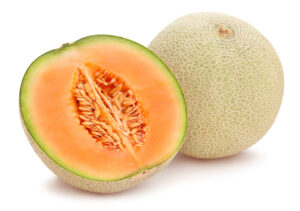

The FDA Releases 2022 Cantaloupe Outbreak Investigation Report

Ryan Maus · June 11, 2023 ·

By Ryan Maus

In August 2022, a CDC epidemiological investigation and traceback data identified a multistate cluster of Salmonella Typhimurium illnesses in the upper Midwest indicating melons as a potential source of exposures. The outbreak was traced to cantaloupe and resulted in eighty-seven illnesses and thirty-two hospitalizations across eleven states. The following describes FDA’s investigational findings and provides their recommendations to growers of melons and similar produce.

The FDA utilized traceback data to identify a common packinghouse of suspect cantaloupes associated with the outbreak. However, there was no convergence to a single shipment of products. Three farms in southern Indiana that supplied the common packinghouse were identified as potential sources of cantaloupe. Around the growing locations other commodities were grown such as grain, oilseed, and beans; interspersed with various vegetable crops, including melons; and several poultry feeding operations. Heavy rains had also occurred in the growing region in late July resulting in floods.

Sampling of the packing house, the three farms, and the surrounding lands resulted in numerous findings of Salmonella, but only one of the farms produced an isolate genetically related to the outbreak strain (i.e., having an intermediate level of differences in genomes but not a genetic match). The results suggest that Salmonella presence is a reoccurring issue that may impact the safety of melons grown in this region.

FDA provides the following recommendations/requirements to producers of melons and similar produce.

  • Review current conditions and practices to determine whether they are adequate or if additional
  • prevention measures are warranted.
  • Understand previous land use to identify and address potential sources of pathogens that may
    affect their farming operations.
  • Assess risks that may be posed by adjacent and nearby land uses, especially as it relates to the
    presence of livestock, poultry, and the interface between farmland, and other agricultural areas.
  • Consider additional tools such as pre-harvest and/or post-harvest sampling and testing of
    products to help inform the need for specific prevention measures.
  • Poultry manure, while valued for its fertilizer value, is a known reservoir for Salmonella
    spp. Proper application of a manure that has been treated with a validated and verified process
    to reduce pathogens (e.g., composting with time and temperature measurements) can
    significantly reduce the potential for the integration of Salmonella or other human pathogens into
    soils (as compared to the use of raw manures).
  • Inspect, maintain, and clean and, when necessary and appropriate, sanitize all food contact
    surfaces of equipment and tools used as frequently as necessary to protect against contamination.
  • When appropriate, use EPA-approved products according to the label for cleaning and sanitizing.
  • Inconsistent adherence to or deviation from existing SOPs for cleaning and sanitizing by farms can
    affect produce safety. Effective communication on farms about SOPs and any changes to those
    SOPs can help ensure that food safety practices are being followed.
  • Root cause analyses may be useful in identifying for growers how human pathogen sources in the
    broader agricultural environment may contribute to contamination.
  • Improve traceability through increased digitization, interoperability, and standardization of
    traceability records which would expedite traceback and help remove contaminated product from
    the marketplace more quickly, thereby preventing further illnesses. This is not only important for
    growers, but also critical for shippers, manufactures, and retailers as well, to improve overall
    traceability throughout the supply chain.

Hepatitis A Outbreak Associated Frozen Strawberries

Ryan Maus · May 23, 2023 ·

By Ryan Maus

A new outbreak of hepatitis A virus has been associated with frozen organic strawberries and sickened five people (with two hospitalizations) from the state of Washington. The strawberries were distributed to numerous retail locations across the country, sometimes comingled with other fruit products. This has led to numerous recalls of products with best by dates as far away as November 2024. The ongoing outbreak serves as a reminder of the hazard viruses can present for certain ingredients and the subsequent products (such as smoothies and juice) in which they are often used.

Outbreaks of hepatitis A are generally reported after epidemiological evidence points to a common food or water source. The virus replicates inside human host cells and is shed in human feces. The virus does not multiply in or on foods but can be transmitted by food and water contaminated with human fecal material. Several fecal-oral scenarios leading to an outbreak include contaminated irrigation or wash water, sick field workers during harvest, or ready-to eat products contaminated by sick food handlers. The current outbreak strain of hepatitis A virus is genetically identical to the hepatitis A strain found in fresh organic strawberries that caused an outbreak in 2022. Organic strawberries in both outbreaks were sourced from farms located in Baja California, Mexico.

Hepatitis A Foodborne Outbreaks (Source FDA and CDC)

YearProductVirusIllness
2023
2022
2019
2017
2016
2016
2013
Frozen Strawberries
Frozen Strawberries
Fresh Blackberries
Frozen Tuna
Frozen Strawberries
Raw Scallops
Pomegranate Seeds
Hepatitis A
Hepatitis A
Hepatitis A
Hepatitis A
Hepatitis A
Hepatitis A
Hepatitis A
5 (currently)
18
20
Unknown
143
292
162

Berries contaminated with hepatitis A can also pose a hazard when processed into products such as fresh fruit smoothies or juice. A recent warning letter was issued to a juice manufacturer that used contaminated strawberries in the formulation of a high pressure processed (HPP) juice product. The manufacturer did not validate that the HPP treatment would produce the required minimum 5-log reduction to control the target pathogen (hepatitis A virus). Generally, cooking food until it’s at a
temperature of 190˚F in the middle for at least 1½ minutes or boiling food in water for at least 3 minutes inactivates the virus. However, if present, the virus is very hardy and can survive on food, in water, and on environmental surfaces for extended periods of time. Hepatitis A illness usually begins about 2-4 weeks after exposure causing symptoms of fever, low appetite, nausea, vomiting, diarrhea, muscle aches, and jaundice. The virus can clear on its own within a week or two.

However, in some instances, the infection can last up to 6 months and cause inflammation and damage to the liver. Although the virus cannot grow in the
environment, it is considered to be extremely stable under a wide range of environmental conditions, including freezing, heat, desiccation, and chemicals. Concentrations of disinfectants commonly used against pathogenic bacteria might not be effective. A vaccine for the virus has provided a reasonable control measure to prevent the spread of hepatitis A. Preventive measures generally include good food handler hygiene, supplier verification programs, use of potable water, thermal processing, and proper sanitation.

Footer

CONTACT US

Have a question? Contact our Sales team.

Request Info

Subscribe to our newsletter

Subscribe

“Science you can trust from concept to consumer -since 1967”

We are proud of our integral role in helping to ensure product safety and quality for all our clients.

  • Facebook
  • LinkedIn
  • Twitter

CAREERS

Deibel Laboratories is always seeking energetic individuals to fill positions at our rapidly growing corporation of food and pharma/cosmetic testing laboratories.

VIEW CAREERS

LOCATIONS

California, Idaho, Pennsylvania, Sarasota, Gainesville, Lakeland, Illinois, Minnesota, Missouri, Wisconsin, Kansas, Tennessee, Texas, Canada

SEE LOCATIONS

Copyright © 2025 Deibel Laboratories, All Rights Reserved.
PRIVACY NOTICE · COOKIE POLICY · TERMS AND CONDITIONS