
• Skip to primary navigation
  • Skip to main content
  • Skip to footer
Deibel Laboratories

Deibel Laboratories

Science you can trust from concept to consumer.

  • ABOUT US
    • MEET OUR STAFF
    • ACCREDITATION
    • TERMS AND CONDITIONS
  • SERVICES
    • TESTING SERVICES
      • MICROBIOLOGY
      • CHEMISTRY
      • BACTERIAL / FUNGAL IDENTIFICATION
      • ALLERGEN TESTING
      • NUTRIENT ANALYSES FOR LABELING AND CLAIMS
      • TOXIN TESTING
      • FDA DETENTION SAMPLING
      • PERSONAL CARE & COSMETICS
    • SPECIAL PROJECTS
      • CHALLENGE STUDIES
      • SHELF LIFE STUDIES
      • PROCESS VALIDATION
      • METHOD/MATRIX VALIDATION
    • ADVISORY SERVICES
    • ENVIRONMENTAL MONITORING SERVICES
    • BIOFUELS
    • DEIBEL COLAB 2.0
  • TRAINING AND EDUCATION
    • HACCP TRAINING
    • FSPCA PCQI TRAINING
    • SANITATION OPERATOR TRAINING
    • MICROBIOLOGY 101
    • FSPCA FOREIGN SUPPLIER VERIFICATION PROGRAM (FSVP) TRAINING FOR IMPORTERS OF FOODS FOR HUMAN AND ANIMALS
    • LABELING REQUIREMENTS FOR FOODS AND BEVERAGES
      MARKETED IN THE U.S.
    • GOOD MANUFACTURING PRACTICES
  • CONTACT US
  • Show Search
Hide Search

food industry

Warning Letter Highlights Necessary Controls for C. botulinum

Ryan Maus · November 14, 2023 ·

A warning letter was recently issued to a manufacturer of refrigerated ready-to-eat baby food products packaged in a reduced oxygen environment. The investigation that led to the warning letter was initiated because of a consumer complaint that involved a case of infant botulism. Infant botulism is caused by the presence of C. botulinum spores that temporarily colonize an infant’s large intestine and produce botulinum neurotoxin. However, spores are not a hazard for the majority of the population with developed guts. Instead, controlling C. botulinum spore germination, outgrowth, and toxin production in products that can support growth should be the focus of food manufacturers as highlighted by FDA in this warning letter.
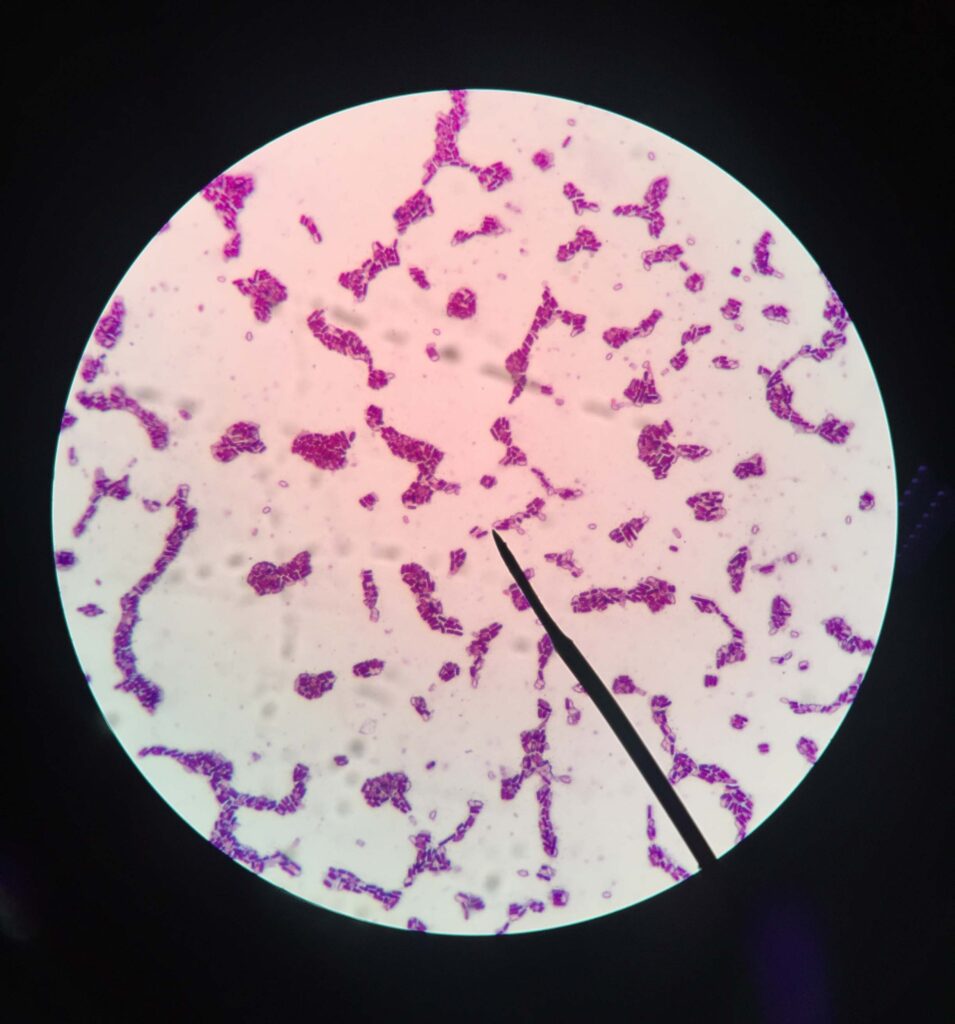
In the warning letter, FDA cites that the manufacturer’s hazard analysis did not identify the potential for C. botulinum growth and/or toxin formation due to reduced oxygen packaging. This hazard should have been identified because C. botulinum is associated with the various product ingredients that are grown in the ground. This organism is an anaerobe that can grow in the reduced oxygen packaged product and pose a food safety risk because the product did not undergo a sporicidal treatment and the formulation did not control outgrowth and toxin formation.

Although the product was stored refrigerated, FDA indicated that refrigeration temperatures exceeded the levels necessary to prevent non-proteolytic C. botulinum strain outgrowth, considered to be <3°C. Likewise, the manufacturer did not utilize calibrated temperature probes that often indicated misleading monitored results. When temperature is the only control for C. botulinum, strict monitoring of that control is necessary throughout product storage.

Because temperature control throughout product storage, during transportation, and by the consumer may be hard to maintain, manufacturers will turn to other controls for C. botulinum. This can include a sporicidal heat treatment as outlined in 21 CFR Part 113 (Thermally Processed Low-Acid Foods Packaged In Hermetically Sealed Containers) or formulation and packaging controls that include:

• pH ≤4.6

• Water activity ≤0.935

• Aerobic packaging

• Preservatives such as nitrite, sorbic acid, phenolic antioxidants, polyphosphates, and ascorbates

A hurdle approach, or combination of controls, can also be used. In this case, no single control limits C. botulinum outgrowth. The combination of controls is commonly verified for effectiveness with a challenge study. Testing and handling of many bacterial toxins, like botulism toxin, requires sophisticated laboratory quality controls, including CDC / APHIS select agent accreditation. Deibel Laboratories has select agent approval and can conduct challenge studies to help verify that controls are effective to prevent C. botulinum outgrowth and toxin formation.

MICROBIOLOGY “101”: FUNDAMENTALS OF MICROBIOLOGY FOR FOOD INDUSTRY PROFESSIONALS

Antonio Alcaraz · November 2, 2023 ·

Virtual Educational Course

April 3, 2024 All day

Understanding the microorganisms that threaten Food Safety and cause food spoilage is fundamental to manufacturing safe and wholesome food products. Microorganisms are everywhere but how can they be controlled in a food production facility?
This course will cover the basics of food safety microbiology and arm you with the information you need to avoid microbial contamination and produce safe food products.
The course features an innovative format, with interactive discussions as well as “virtual lab” demonstrations of microbial detection methods.

Course Topics Include:

• Microbial Ecology: Food safety depends on knowing the conditions that encourage microbial growth and knowing how to keep pathogens out, kill them or keep them from growing.
• Food-borne Pathogens: An understanding of Salmonella, Listeria monocytogenes, Shiga toxin-producing E. coli (STEC) and other pathogens of concern can lead to better strategies for control.
• Indicator organisms: These nonpathogenic organisms are valuable verification tools for hygiene and process controls.
• Spoilage: Yeast and mold are major players in food spoilage. Knowing how to detect, identify and control them can extend shelf life.
• Sampling and Testing: Statistically representative sampling plans and standard methods of analysis are critical to obtaining credible data by which food safety decisions can be made.
• Current Food Safety Issues: Staying informed about foodborne illness outbreaks, recalls and regulations is essential to managing your Food Safety Plan.

Microbiology 101 Team

Book Now

For more information on Microbiology “101” training offered by Deibel Laboratories, please contact Sales at Sales@DeibelLabs.com (847-329-9900).

  • Google Calendar
  • iCalendar
  • Outlook 365
  • Outlook Live

MICROBIOLOGY “101”: FUNDAMENTALS OF MICROBIOLOGY FOR FOOD INDUSTRY PROFESSIONALS

Antonio Alcaraz · November 2, 2023 ·

Virtual Educational Course

February 6, 2024 All day

Understanding the microorganisms that threaten Food Safety and cause food spoilage is fundamental to manufacturing safe and wholesome food products. Microorganisms are everywhere but how can they be controlled in a food production facility?
This course will cover the basics of food safety microbiology and arm you with the information you need to avoid microbial contamination and produce safe food products.
The course features an innovative format, with interactive discussions as well as “virtual lab” demonstrations of microbial detection methods.

Course Topics Include:

• Microbial Ecology: Food safety depends on knowing the conditions that encourage microbial growth and knowing how to keep pathogens out, kill them or keep them from growing.
• Food-borne Pathogens: An understanding of Salmonella, Listeria monocytogenes, Shiga toxin-producing E. coli (STEC) and other pathogens of concern can lead to better strategies for control.
• Indicator organisms: These nonpathogenic organisms are valuable verification tools for hygiene and process controls.
• Spoilage: Yeast and mold are major players in food spoilage. Knowing how to detect, identify and control them can extend shelf life.
• Sampling and Testing: Statistically representative sampling plans and standard methods of analysis are critical to obtaining credible data by which food safety decisions can be made.
• Current Food Safety Issues: Staying informed about foodborne illness outbreaks, recalls and regulations is essential to managing your Food Safety Plan.

Microbiology 101 Team

Book Now

For more information on Microbiology “101” training offered by Deibel Laboratories, please contact Sales at Sales@DeibelLabs.com (847-329-9900).

  • Google Calendar
  • iCalendar
  • Outlook 365
  • Outlook Live

Retest Analysis: When Original Sample Results and Retest Results Don’t Correlate

Laurie Post · October 3, 2023 ·

By Laurie Post, Ph.D.
When undesirable microorganisms are detected in a production lot, root cause analysis often includes testing additional samples from the affected lot or related lots of product. However, upon reanalysis, even when a larger sample size is used, the suspect organism cannot be detected in the retest analysis. Correlation differences between original and retest results can occur for several reasons:

  1. Distribution pattern of the microorganisms
  2. Lack of representative sampling
  3. Organism die-off
  4. Level of contamination and probabilities of detection

Distribution
The distribution pattern of microorganisms in a production lot affects the likelihood of detecting the organism in the product. For instance, distribution patterns can be Random or Non-Random.

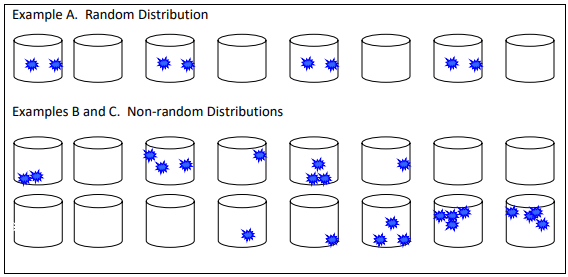
Random Distribution: Microorganisms are distributed evenly throughout the entire lot. Microorganisms will likely be detected. This type of microbial distribution is not a factor of time since at any point in the sampling process there is an equal opportunity to detect the organism in question (Example A).


Non-random Distribution: Microorganisms are not distributed evenly throughout the entire lot. Microorganisms may not be detected by random sampling. This type of distribution is dependent on time since the microbial contamination is only represented at certain intervals in the production cycle without equal opportunity for detection (Examples B and C)

Example B shows a non-random distribution pattern of organisms that can be present at the startup of production. In this case, the food actually cleans the line, so that over time the contaminant is reduced to undetectable levels. If a retest sample of this lot of production is pulled from containers made later in the day, then the retest results will be negative for the target organism, even though the organism was present.

Example C is another example of non-random microbial distribution that can occur when condensate drips onto exposed product. Condensate began to drip sometime after startup and continues throughout the rest of the day, increasing toward shutdown. If retain samples taken at the beginning of the day were selected for retest analysis, the retest samples would likely be negative for the target organism even
though the organism was present in that lot of production.


Sampling
Microbiological analyses are only as good as the sampling procedure used to procure the sample. Every effort must be made to obtain a RANDOM SAMPLE. “Spot sampling” or taking a single sample will not yield a representative sample. FDA recommends taking 30 random 25g samples during the entire production run for Ready-to-Eat products that will be consumed without a process lethal to microbial pathogens. These include products such as cereals, confectionary products, cheese, dairy, spices – and many others (FDA Bacteriological Analytical Manual). For fluid and powdered products, most manufacturers employ mechanical or auto-samplers. For discrete products, samples are taken on a time production basis (i.e. one candy bar every half hour) and then the analytical unit (the actual amount tested) is made by compositing. Compositing must be performed carefully and thoughtfully, not only to ensure a representative sample, but also to avoid sample contamination.

Organism Die-off
Organisms contaminating a product may not survive at the same level for long periods of time. For example, Escherichia coli (E. coli) is not capable of long-term survival in an inhospitable matrix, such as chocolate, and will eventually die off. Levels may fall below the ability of an assay to detect the organism.


Levels of Contamination and Probability of Detection
The probability of finding a target organism in a retest sample is based on the probability of finding the target organism in the original sample. If 10 samples are collected for analysis and only one tests positive for a pathogen, the level of contamination is one in ten or 10%. Based on a standard statistical analysis, if there is a 10% chance of finding the target organism in the original sample, then the ability of finding the organism a second time by retest sampling is [10% X 10%] or [0.10 X 0.10 = 0.01] or one in a hundred. Similarly, if the level of contamination is 5%, the probability of finding the positive a second time is one in twenty-five and 1% is one in ten thousand. The short hand version of this is to simply square the level of
contamination, as shown here:

Level of Contamination- Probability of Finding the Target Organism in the Original Sample Probability of Finding the Target Organism in a
Retest Sample
One in two (50%)One in four (25%)
One in four (25%)One in sixteen (6.5%)
One in five (20%)One in twenty five (2.5%)
One in ten (10%)One in a hundred (1%)
One in a hundred (1%)One in ten thousand (0.01%)

There are many factors that can result in correlation differences between original and retest results. But, if a retest is desired, pull many random samples and request a retest as soon as possible.

Regulatory Watch Out!

Laurie Post · September 6, 2023 ·

Use of Unapproved Food Additives – FDA’s Public Inventory

Any substance used or intended for use in food must be authorized by the FDA for use as a food additive under the Federal Food, Drug, and Cosmetic (FD&C) Act, unless the use of that substance is generally recognized as safe (GRAS) by qualified experts or qualifies for an exemption.


As part of its on-going compliance activities, FDA conducts post-market activities to monitor the food supply for chemical contaminants. FDA identifies foods that contain a substance for which there is no authorization as a food additive and then reviews the regulatory status of this substance. FDA scientists analyze whether there is a basis to conclude that the intended use of the substance is GRAS or meets a
listed exception to the food additive definition. When FDA scientists determine that a substance is an unapproved food additive because it is not GRAS for its intended use (and does not meet a listed exception), they deem the additive to be unsafe and any food that contains the additive is adulterated.

On July 12, 2023, FDA released a public inventory of certain food ingredients that do not have GRAS status as determined by the agency and are therefore deemed unsafe. The inventory is a useful tool to assure the use of authorized ingredients.


The FDA Concludes Voluntary Pilot Program to Evaluate Alignment of Third-Party Food Safety Standards
with FSMA Rules


Food manufacturers may find that they are required to comply with one of the Global Food Safety Initiative standards in addition to the FDA’s Preventive Controls for Human Food or Produce Safety Rules. The FDA recently concluded a voluntary pilot program to evaluate alignment of private third-party food safety audit standards including BRC, FSSC22000, SQF and Global G.A.P. with applicable FDA regulations.


The pilot program was launched to help both FDA and industry gain a better understanding of whether these standards align with FDA regulations. Alignment between these standards may allow a company to structure their food safety plan to eliminate redundancy in their documentation and auditing programs.

Buyers and others in the food supply-chain often use third-party audits to assess the quality and safety of a product. Buyers, such as importers and receiving facilities, might stipulate an audit as part of a purchase agreement. In addition, three FSMA regulations – the Preventive Controls for Human Food rule, Preventive Controls for Animal Food (PC Animal Food) rule, and Foreign Supplier Verification Programs (FSVP) rule – allow for third-party audits to be used as supplier verification activities. Points of alignment would provide confidence that, in general, the third-party standards used to audit suppliers adequately address applicable FDA food safety requirements.


The results of the pilot program can be found in The FDA Concludes Voluntary Pilot Program to Evaluate Alignment of Third-Party Food Safety Standards with FSMA Rules. The FDA’s statements regarding alignment of the standards are referenced in the table below and apply only to the specified audit standards and addenda listed.


The reviews listed in the table focused on assessing third-party food safety standards and not the overall quality of the audit programs or qualifications of auditors. The FDA’s review and the findings from this pilot do not constitute an endorsement of any one food safety audit standard, or audits conducted under such standards. The FDA also adds a qualifying statement that third-party audits are not a substitute for FDA or state regulatory inspections for compliance with FDA regulations, including the Preventive Controls for Human Food Rule or the Produce Safety Rule.


Third-Party Food Safety Audit Standard and Applicable
Addendum
Scope Name
BRC Global Standard Food Safety plus the Global Standard Food Safety,
Issue 9, Interpretation Guideline
Preventive Controls for Human Food (PCHF)
FSSC 22000 Scheme 5.1 for Food Manufacturing plus the FSSC 22000, Version 3 FSMA PCHF Report Addendum
Preventive Controls for Human Food (PCHF
SQF Food Safety Code: Food Manufacturing, Edition 9 plus the SQF
Addendum for the Preventive Controls for Human Food
Preventive Controls for Human Food (PCHF)
GLOBALG.A.P. Integrated Farm Assurance – All Farm Base Crops Base – Fruit and Vegetables Checklist. Version 5.4-1- GFS plus the GLOBALG.A.P. Food Safety Modernization Act Produce Safety Rule Add-on Module Version 1.3Produce Safety Rule (PSR)
*Did not include Subpart E, related to Agricultural Water (as applicable to non-sprout produce) or Subpart M, related to sprouts

  • « Go to Previous Page
  • Page 1
  • Page 2
  • Page 3
  • Page 4
  • Page 5
  • Page 6
  • Go to Next Page »

Footer

CONTACT US

Have a question? Contact our Sales team.

Request Info

Subscribe to our newsletter

Subscribe

“Science you can trust from concept to consumer -since 1967”

We are proud of our integral role in helping to ensure product safety and quality for all our clients.

  • Facebook
  • LinkedIn
  • Twitter

CAREERS

Deibel Laboratories is always seeking energetic individuals to fill positions at our rapidly growing corporation of food and pharma/cosmetic testing laboratories.

VIEW CAREERS

LOCATIONS

California, Idaho, Pennsylvania, Sarasota, Gainesville, Lakeland, Illinois, Minnesota, Missouri, Wisconsin, Kansas, Tennessee, Texas, Canada

SEE LOCATIONS

Copyright © 2026 Deibel Laboratories, All Rights Reserved.
PRIVACY NOTICE · COOKIE POLICY · TERMS AND CONDITIONS