
• Skip to primary navigation
  • Skip to main content
  • Skip to footer
Deibel Laboratories

Deibel Laboratories

Science you can trust from concept to consumer.

  • ABOUT US
    • MEET OUR STAFF
    • ACCREDITATION
    • TERMS AND CONDITIONS
  • SERVICES
    • TESTING SERVICES
      • MICROBIOLOGY
      • CHEMISTRY
      • BACTERIAL / FUNGAL IDENTIFICATION
      • ALLERGEN TESTING
      • NUTRIENT ANALYSES FOR LABELING AND CLAIMS
      • TOXIN TESTING
      • FDA DETENTION SAMPLING
      • PERSONAL CARE & COSMETICS
    • SPECIAL PROJECTS
      • CHALLENGE STUDIES
      • SHELF LIFE STUDIES
      • PROCESS VALIDATION
      • METHOD/MATRIX VALIDATION
    • ADVISORY SERVICES
    • ENVIRONMENTAL MONITORING SERVICES
    • BIOFUELS
    • DEIBEL COLAB 2.0
  • TRAINING AND EDUCATION
    • HACCP TRAINING
    • FSPCA PCQI TRAINING
    • SANITATION OPERATOR TRAINING
    • MICROBIOLOGY 101
    • FSPCA FOREIGN SUPPLIER VERIFICATION PROGRAM (FSVP) TRAINING FOR IMPORTERS OF FOODS FOR HUMAN AND ANIMALS
    • LABELING REQUIREMENTS FOR FOODS AND BEVERAGES
      MARKETED IN THE U.S.
    • GOOD MANUFACTURING PRACTICES
  • CONTACT US
  • Show Search
Hide Search

fda

Warning Letter Highlights Necessary Controls for C. botulinum

Ryan Maus · November 14, 2023 ·

A warning letter was recently issued to a manufacturer of refrigerated ready-to-eat baby food products packaged in a reduced oxygen environment. The investigation that led to the warning letter was initiated because of a consumer complaint that involved a case of infant botulism. Infant botulism is caused by the presence of C. botulinum spores that temporarily colonize an infant’s large intestine and produce botulinum neurotoxin. However, spores are not a hazard for the majority of the population with developed guts. Instead, controlling C. botulinum spore germination, outgrowth, and toxin production in products that can support growth should be the focus of food manufacturers as highlighted by FDA in this warning letter.
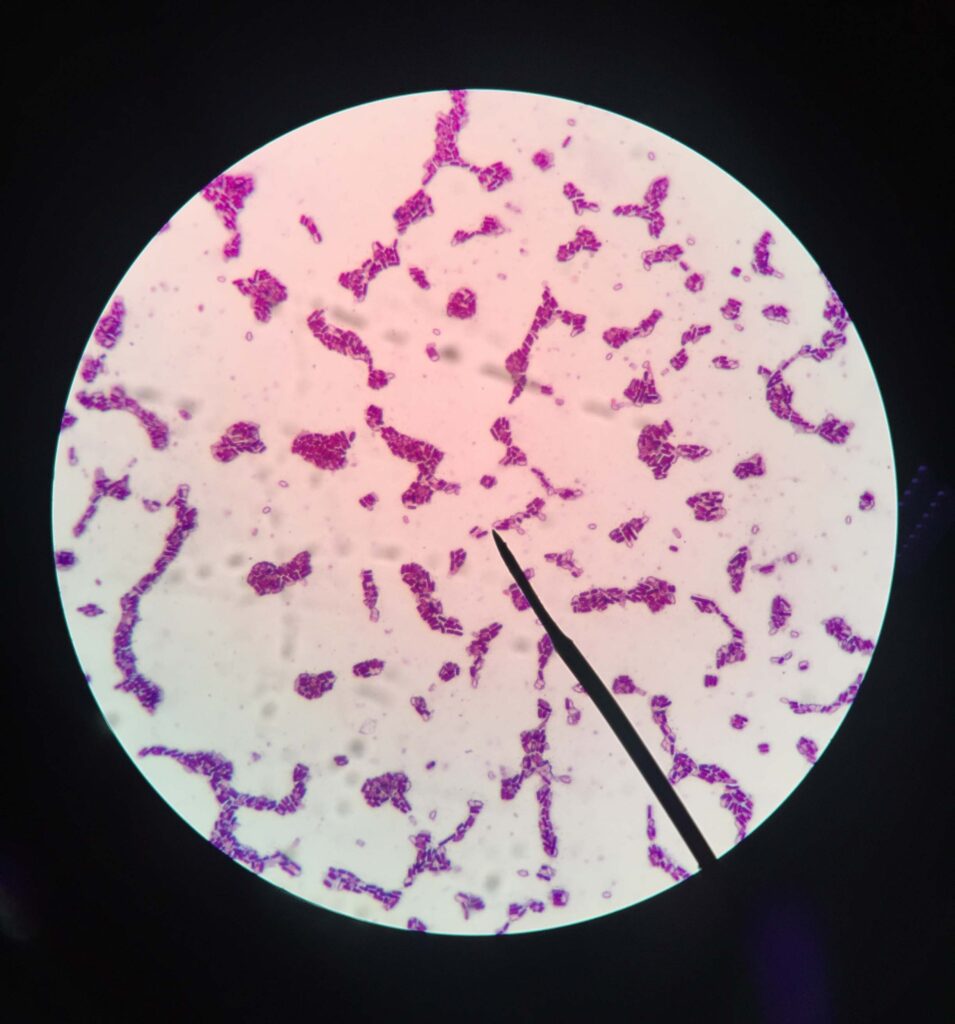
In the warning letter, FDA cites that the manufacturer’s hazard analysis did not identify the potential for C. botulinum growth and/or toxin formation due to reduced oxygen packaging. This hazard should have been identified because C. botulinum is associated with the various product ingredients that are grown in the ground. This organism is an anaerobe that can grow in the reduced oxygen packaged product and pose a food safety risk because the product did not undergo a sporicidal treatment and the formulation did not control outgrowth and toxin formation.

Although the product was stored refrigerated, FDA indicated that refrigeration temperatures exceeded the levels necessary to prevent non-proteolytic C. botulinum strain outgrowth, considered to be <3°C. Likewise, the manufacturer did not utilize calibrated temperature probes that often indicated misleading monitored results. When temperature is the only control for C. botulinum, strict monitoring of that control is necessary throughout product storage.

Because temperature control throughout product storage, during transportation, and by the consumer may be hard to maintain, manufacturers will turn to other controls for C. botulinum. This can include a sporicidal heat treatment as outlined in 21 CFR Part 113 (Thermally Processed Low-Acid Foods Packaged In Hermetically Sealed Containers) or formulation and packaging controls that include:

• pH ≤4.6

• Water activity ≤0.935

• Aerobic packaging

• Preservatives such as nitrite, sorbic acid, phenolic antioxidants, polyphosphates, and ascorbates

A hurdle approach, or combination of controls, can also be used. In this case, no single control limits C. botulinum outgrowth. The combination of controls is commonly verified for effectiveness with a challenge study. Testing and handling of many bacterial toxins, like botulism toxin, requires sophisticated laboratory quality controls, including CDC / APHIS select agent accreditation. Deibel Laboratories has select agent approval and can conduct challenge studies to help verify that controls are effective to prevent C. botulinum outgrowth and toxin formation.
Failure to Develop a Foreign Supplier Verification Program -Top FDA Citation for Fiscal Year 2023

Ryan Maus · November 14, 2023 ·

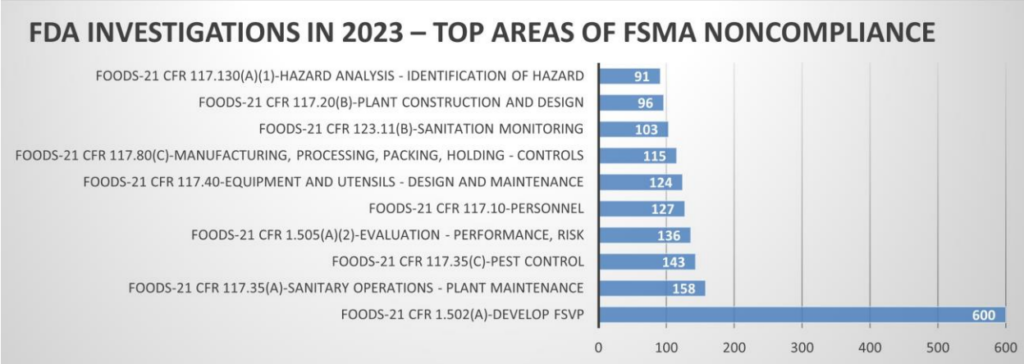
According to FDA’s Data Dashboard, the most frequently cited violation by FDA investigators in fiscal year 2023 (ending September 30th) was the failure to develop an FSVP. This encompassed about 35% of all form 483 citations issued. Additionally, nine warning letters were published in the past month alone when food importers failed to correct FSVP violations cited during FDA investigations. According to FDA data, warning letters issued for FSVP violations in 2023 increased in number from the previous year. Forty-eight importers were placed on import alert and only two were removed. Normally, FDA investigators will determine if foreign food is imported during routine investigations. Manufacturers that import food and lack FSVP documentation will be cited for not following the FSVP rule if no exemptions apply.

Warning letters published this past month cited inaction on developing, maintaining, and following an FSVP as required by section 805 of the FD&C Act and 21 CFR 1.502(a) for any of the foods they import. Generally a written response to a warning letter is required within 15 working days of notification. If the matter is not adequately addressed, the FDA may take further action including an FDA product hold, detention, and Import Alerts (e.g. Import Alert # 99-41). Removal from an Import Alert is a lengthy process. The importer is required to submit information to the FDA that adequately demonstrates resolution of the conditions that gave rise to the FSVP violation and provide assurance that FSVP requirements will be met for future imports.

Final guidance is available from FDA to help importers comply with the FSVP rule. U.S. importers who have responsibility for fulfilling FSMA FSVP requirements for foreign suppliers that manufacture, process, pack, or hold food intended for human or animal consumption in the U.S. must use a qualified individual to develop and perform FSVP activities. These activities include determining known or reasonably
foreseeable hazards associated with each type of food, evaluating risks posed by the supplier’s performance, approving suppliers, conducting appropriate supplier verification activities, and verifying corrective actions that provide assurance the food’s hazards have been significantly minimized or prevented. Detailed records documenting these activities are also required.

A course specifically designed to train FSVP qualified individuals was developed by the Food Safety Preventive Controls Alliance (FSPCA) that provides a standardized curriculum recognized by the FDA. The course is offered by Deibel Laboratories.

Food Allergens – Understanding The Hazards

Laurie Post · November 14, 2023 ·

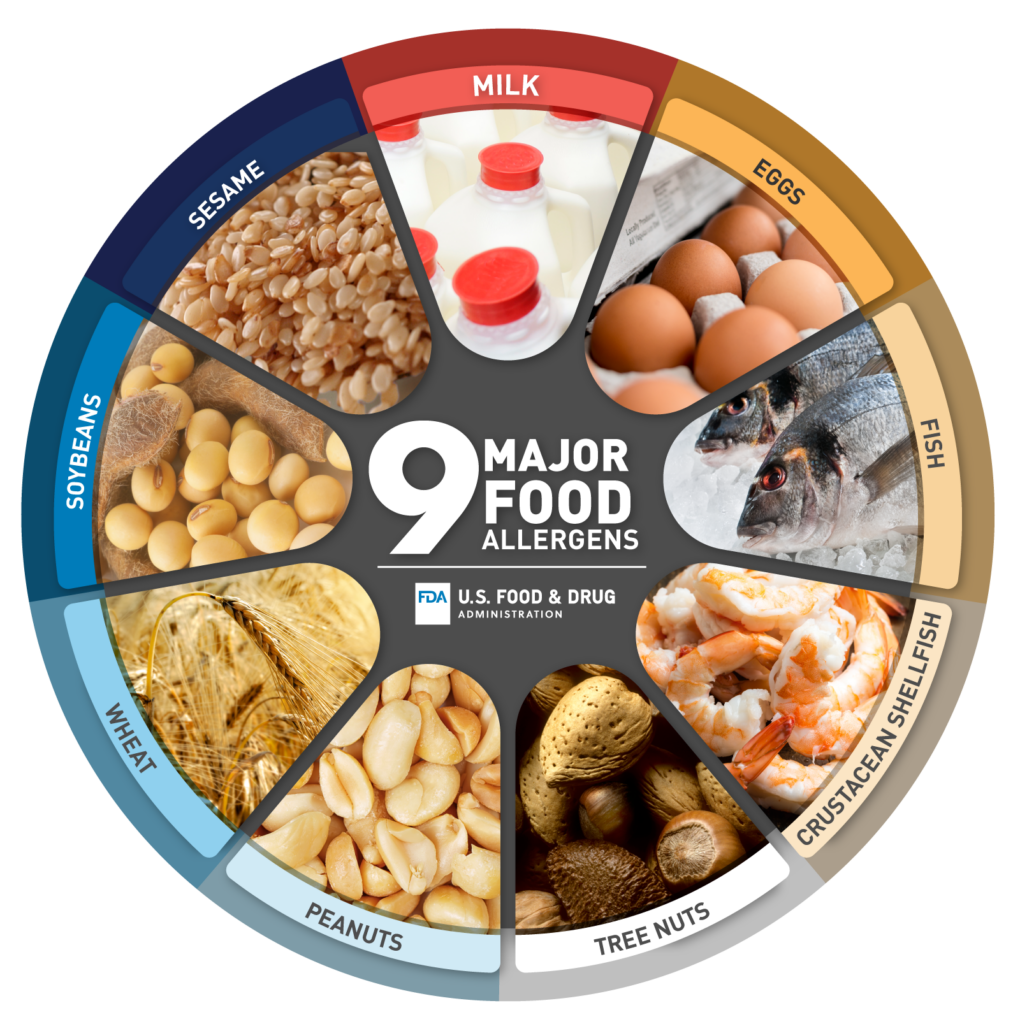
Violations due to food allergen hazards are a major food safety concern globally. In a recent article in the Journal of Food Protection, FDA reviewed recalls associated with major food allergens (MFA) and gluten in FDA regulated foods from fiscal years 2013 to 2019. The review distilled information about the foods most frequently implicated in allergen recalls and the specific food allergens associated with recalled products. The root causes of the recalls that occurred over the time period studied were also examined.


During fiscal year 2013-2019, 1417 allergen related recalls were reported. Most of the recalls (97%) were classified as Class I (51%), posing a reasonable probability of serious adverse health consequences or death or Class II (46%), posing a remote probability of serious adverse health consequences or temporary/reversible adverse health consequences. Of the 1471 recalls, 1415 recalls were due to MFAs, 34 recalls were due to a gluten-free labeling violation, and 23 recalls involved other allergens. Milk was the most common allergen involved in MFA recalls (37.5%), followed by soy (22.5%) and tree nuts (21.6%). Almond, anchovy, and shrimp were the most common allergens recalled within the MFA groups of tree nuts, fish, and Crustacean shellfish, respectively. About 97% of MFA recalls involved one product category and among them, the category of ‘bakery products, dough, bakery mixes and icings’ ranked first (367 recalls), followed by the category of ‘chocolate and cocoa products’ (120 recalls).

The top five recalled food product categories – major food allergens implicated and number of recalls.

Product CategoriesMultiple MFACrustacean
Shellfish
EggFishMilkPeanutSoyTree NutWheatTotal
Bakery
Products,
dough, bakery
mixes, and
icings
8303318922337531387
Chocolate and
cocoa
products
2201042257203120
Multiple food
dinners,
gravies,
sauces, and
specialties
312158201101112110
Snack foods
(flour, meal, or
vegetable
base)
9031456116586
Ice cream and
related
products
12050820223272
Adapted from G. M. Sharma et.al. 2023.

The “mode of discovery” for allergen issues leading to a recall was also examined. These issues were most often detected by consumer and downstream customer complaints.

DiscoveredDescriptionNumbers of recalls % of total recalls
ComplaintIncludes complaint from consumer, downstream customer,
distributor, or others; did not involve allergic or other adverse
reactions
39227.7
FDAIncludes inspection or other means of discovery by FDA19313.6
FirmIncludes recalling firm, manufacturing firm, or responsible firm27919.7
Other governmentIncludes inspection, notification or other means of discovery by
State agencies, other federal agencies, or foreign government
21515.2
ReactionIncludes consumer adverse reaction associated with the
consumption of the product
1258.8
Unknownmode of discovery not identified based on available information to
FDA
21114.9
Adapted from G. M. Sharma et.al. 2023.

Nineteen different root cause categories were identified for the MFA recalls that occurred during the period studied. Overall, allergen labeling and packaging errors were the major sources of issues resulting in 64.6% (N = 914) of total MFA recalls.

Allergen cross-contact, defined as the unintentional incorporation of a food allergen into a food, resulted in 21.3% (N = 301) of total MFA recalls. Sources of unintended allergen presence in food products were related to processing or production such as a mix-up in rework, the use of a wrong ingredient that was not communicated on the product label (5.6% of total MFA recalls), or inadequate sanitation practices (7.1% of total MFA recalls).
1163 recalls out of 1415 MFA recalls were traced to a specific root cause. Considering all sources of
allergen issues, these were identified as the most common root causes:
◼ 662 recalls were traced to errors in labeling and packaging.
◼ 307 recalls were traced to raw or incoming ingredients.
◼ 194 recalls were traced to processing or production errors within the facility.

Root CauseExamples
No carry-through • MFA in sub-ingredient not declared on the final product
• MFA in an incidental additive not declared on final product
Wrong Package • Use of wrong primary or secondary package
• Mix-up of wrong package at supplier or manufacturer level
Wrong Label• Use of wrong label or one labels on the product is wrong
• Label mix-up at supplier or manufacturer level
Terminology• Ingredient is declared but its MFA source is not
Cross-contact• Sanitation issues
• Change-over or sequencing issues
Wrong ingredient• Use of wrong formulation or recipe
• Use of wrong sub-product in a composite product kit
Adapted from G. M. Sharma et.al. 2023.

Identification of allergen controls that could mitigate the source of allergen errors are listed below. Label controls (includes label content controls and label management controls) could have prevented 893 out of 1163 MFA recalls (76.8%), whereas allergen cross-contact controls and supply chain controls could have prevented 16.7% and 6.5% MFA recalls, respectively.

Allergen controlsSource of problemRoot causeNumber of recalls% of total recalls
Cross-contact controlsProcessing or productionIn process171.5
Other cross-contact796.8
Positive allergen test171.5
Rework161.4
Wrong ingredient655.6
Total cross-contact controls19416.7
Label content controls Labeling and packagingComputer error534.6
Foreign language121.0
Knowledge 342.9
No declaration 252.2
Not updated564.8
Partial declaration353.0
Terminology12110.4
Raw or incoming ingredientsNo carry-through23119.9
Total label content controls56748.8
Label management controlsLabeling and packagingWrong label16113.8
Wrong package16514.2
Total label management controls32628.0
Supply Chain ControlsRaw or incoming ingredientsIngredient mislabeled211.8
Other cross-contact221.9
Positive allergen test191.6
Wrong ingredient141.2
Total supply chain controls766.5
Total allergen controls1163100.0
Adapted from G. M. Sharma et.al., 2023.

Recent guidance documents listed below provide useful information for food allergen hazard assessments and associated controls.

CPG Sec 555.250 DRAFT: Major Food Allergen Labeling and Cross-contact | FDA

-Major Food Allergen Labeling and Cross-contact Draft Compliance Policy Guide (CPG)

Update to Draft Guidance for Industry: Hazard Analysis

-Chapter 11: Food Allergen Program

Source of information: FDA.gov

HAZARD ANALYSIS AND CRITICAL CONTROL POINT (HACCP) TRAINING COURSE

Antonio Alcaraz · November 2, 2023 ·

VIRTUAL COURSE

May 20, 2025 @ 12:00 pm – May 22, 2025 @ 12:00 pm

May 20, 2025 @ 12:00 pm – May 22, 2025 @ 12:00 pm

The Deibel Laboratories HACCP training program is designed to meet the USDA’s training requirements (9 CFR 417) and provides hazard analysis training for FDA regulated facilities that must have a FSMA mandated Food Safety Plan in place. Food Safety Plans must include an analysis of hazards with associated risk-based preventive controls. This course is accredited by the International HACCP Alliance. Participants receive a certificate with the HACCP Alliance seal upon completion of the course. The training program is conducted by our HACCP Alliance Lead Instructors.
Dr. Robert Deibel was one of the original pioneers of HACCP. He developed the HACCP concept from its original three HACCP principles to five, paving the way for the seven principles in place today. He also developed the first “HACCP Short Course” and pioneered training for industry leaders in the early 1970’s. We are proud of this history and continue this excellent tradition in the courses we teach today.

ABOUT THE COURSE
• This is a 2.5 day interactive virtual class that includes a HACCP Training Manual and a certificate with the HACCP Alliance seal.
• Participants will gain an understanding of HACCP systems and how they are used to manage and control the hazards encountered in food manufacturing facilities. This will include the development of a model HACCP plan
• Discussions will include how to perform a hazard analysis, conduct process validations, prepare for and develop HACCP plan audits, and establish pre-requisite program verifications.
• The integration of HACCP plans into FSMA mandated Food Safety Plans will also be discussed in relation to the FDA regulated food industry.

AT THE CONCLUSION, PARTICIPANTS WILL


• Understand the importance of HACCP Pre-requisite programs including GMPs, Pest Control and Sanitation.
• Be able to recognize the hazards that must be identified when conducting a hazard analysis.
• Learn how manage significant food safety hazards through the use of preventive controls and Critical Control Points (CCPs).
• Understand how to develop and implement a HACCP plan that manages identified hazards with associated controls, and maintains the effectiveness of those controls through verification and validation activities.

HACCP Instructors

  • Google Calendar
  • iCalendar
  • Outlook 365
  • Outlook Live

HAZARD ANALYSIS AND CRITICAL CONTROL POINT (HACCP) TRAINING COURSE

Antonio Alcaraz · November 2, 2023 ·

VIRTUAL COURSE

March 19, 2024 @ 12:00 pm – March 21, 2024 @ 12:00 pm

March 19, 2024 @ 12:00 pm – March 21, 2024 @ 12:00 pm

The Deibel Laboratories HACCP training program is designed to meet the USDA’s training requirements (9 CFR 417) and provides hazard analysis training for FDA regulated facilities that must have a FSMA mandated Food Safety Plan in place. Food Safety Plans must include an analysis of hazards with associated risk-based preventive controls. This course is accredited by the International HACCP Alliance. Participants receive a certificate with the HACCP Alliance seal upon completion of the course. The training program is conducted by our HACCP Alliance Lead Instructors.
Dr. Robert Deibel was one of the original pioneers of HACCP. He developed the HACCP concept from its original three HACCP principles to five, paving the way for the seven principles in place today. He also developed the first “HACCP Short Course” and pioneered training for industry leaders in the early 1970’s. We are proud of this history and continue this excellent tradition in the courses we teach today.

ABOUT THE COURSE
• This is a 2.5 day interactive virtual class that includes a HACCP Training Manual and a certificate with the HACCP Alliance seal.
• Participants will gain an understanding of HACCP systems and how they are used to manage and control the hazards encountered in food manufacturing facilities. This will include the development of a model HACCP plan
• Discussions will include how to perform a hazard analysis, conduct process validations, prepare for and develop HACCP plan audits, and establish pre-requisite program verifications.
• The integration of HACCP plans into FSMA mandated Food Safety Plans will also be discussed in relation to the FDA regulated food industry.

AT THE CONCLUSION, PARTICIPANTS WILL


• Understand the importance of HACCP Pre-requisite programs including GMPs, Pest Control and Sanitation.
• Be able to recognize the hazards that must be identified when conducting a hazard analysis.
• Learn how manage significant food safety hazards through the use of preventive controls and Critical Control Points (CCPs).
• Understand how to develop and implement a HACCP plan that manages identified hazards with associated controls, and maintains the effectiveness of those controls through verification and validation activities.

HACCP Instructors

  • Google Calendar
  • iCalendar
  • Outlook 365
  • Outlook Live
  • « Go to Previous Page
  • Page 1
  • Page 2
  • Page 3
  • Page 4
  • Page 5
  • Page 6
  • Go to Next Page »

Footer

CONTACT US

Have a question? Contact our Sales team.

Request Info

Subscribe to our newsletter

Subscribe

“Science you can trust from concept to consumer -since 1967”

We are proud of our integral role in helping to ensure product safety and quality for all our clients.

  • Facebook
  • LinkedIn
  • Twitter

CAREERS

Deibel Laboratories is always seeking energetic individuals to fill positions at our rapidly growing corporation of food and pharma/cosmetic testing laboratories.

VIEW CAREERS

LOCATIONS

California, Idaho, Pennsylvania, Sarasota, Gainesville, Lakeland, Illinois, Minnesota, Missouri, Wisconsin, Kansas, Tennessee, Texas, Canada

SEE LOCATIONS

Copyright © 2026 Deibel Laboratories, All Rights Reserved.
PRIVACY NOTICE · COOKIE POLICY · TERMS AND CONDITIONS