
• Skip to primary navigation
  • Skip to main content
  • Skip to footer
Deibel Laboratories

Deibel Laboratories

Science you can trust from concept to consumer.

  • ABOUT US
    • MEET OUR STAFF
    • ACCREDITATION
    • TERMS AND CONDITIONS
  • SERVICES
    • TESTING SERVICES
      • MICROBIOLOGY
      • CHEMISTRY
      • BACTERIAL / FUNGAL IDENTIFICATION
      • ALLERGEN TESTING
      • NUTRIENT ANALYSES FOR LABELING AND CLAIMS
      • TOXIN TESTING
      • FDA DETENTION SAMPLING
      • PERSONAL CARE & COSMETICS
    • SPECIAL PROJECTS
      • CHALLENGE STUDIES
      • SHELF LIFE STUDIES
      • PROCESS VALIDATION
      • METHOD/MATRIX VALIDATION
    • ADVISORY SERVICES
    • ENVIRONMENTAL MONITORING SERVICES
    • BIOFUELS
    • DEIBEL COLAB 2.0
  • TRAINING AND EDUCATION
    • HACCP TRAINING
    • FSPCA PCQI TRAINING
    • SANITATION OPERATOR TRAINING
    • MICROBIOLOGY 101
    • FSPCA FOREIGN SUPPLIER VERIFICATION PROGRAM (FSVP) TRAINING FOR IMPORTERS OF FOODS FOR HUMAN AND ANIMALS
    • LABELING REQUIREMENTS FOR FOODS AND BEVERAGES
      MARKETED IN THE U.S.
    • GOOD MANUFACTURING PRACTICES
  • CONTACT US
  • Show Search
Hide Search

Deibel Labs

Failure to Develop a Foreign Supplier Verification Program -Top FDA Citation for Fiscal Year 2023

Ryan Maus · November 14, 2023 ·

According to FDA’s Data Dashboard, the most frequently cited violation by FDA investigators in fiscal year 2023 (ending September 30th) was the failure to develop an FSVP. This encompassed about 35% of all form 483 citations issued. Additionally, nine warning letters were published in the past month alone when food importers failed to correct FSVP violations cited during FDA investigations. According to FDA data, warning letters issued for FSVP violations in 2023 increased in number from the previous year. Forty-eight importers were placed on import alert and only two were removed. Normally, FDA investigators will determine if foreign food is imported during routine investigations. Manufacturers that import food and lack FSVP documentation will be cited for not following the FSVP rule if no exemptions apply.
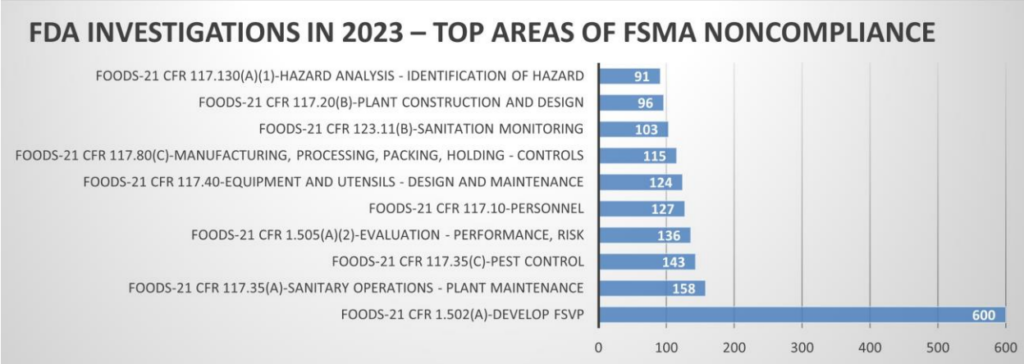
Warning letters published this past month cited inaction on developing, maintaining, and following an FSVP as required by section 805 of the FD&C Act and 21 CFR 1.502(a) for any of the foods they import. Generally a written response to a warning letter is required within 15 working days of notification. If the matter is not adequately addressed, the FDA may take further action including an FDA product hold, detention, and Import Alerts (e.g. Import Alert # 99-41). Removal from an Import Alert is a lengthy process. The importer is required to submit information to the FDA that adequately demonstrates resolution of the conditions that gave rise to the FSVP violation and provide assurance that FSVP requirements will be met for future imports.

Final guidance is available from FDA to help importers comply with the FSVP rule. U.S. importers who have responsibility for fulfilling FSMA FSVP requirements for foreign suppliers that manufacture, process, pack, or hold food intended for human or animal consumption in the U.S. must use a qualified individual to develop and perform FSVP activities. These activities include determining known or reasonably
foreseeable hazards associated with each type of food, evaluating risks posed by the supplier’s performance, approving suppliers, conducting appropriate supplier verification activities, and verifying corrective actions that provide assurance the food’s hazards have been significantly minimized or prevented. Detailed records documenting these activities are also required.

A course specifically designed to train FSVP qualified individuals was developed by the Food Safety Preventive Controls Alliance (FSPCA) that provides a standardized curriculum recognized by the FDA. The course is offered by Deibel Laboratories.
Food Allergens – Understanding The Hazards

Laurie Post · November 14, 2023 ·

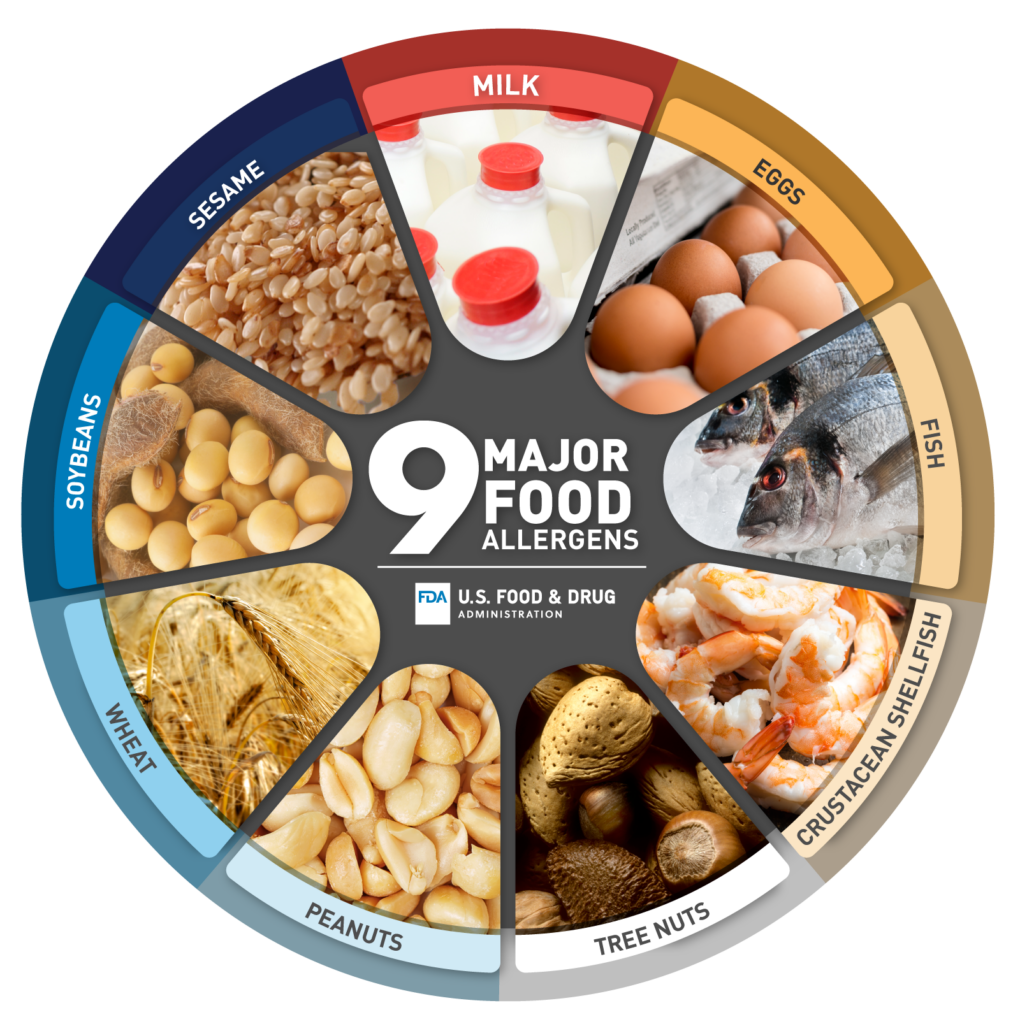
Violations due to food allergen hazards are a major food safety concern globally. In a recent article in the Journal of Food Protection, FDA reviewed recalls associated with major food allergens (MFA) and gluten in FDA regulated foods from fiscal years 2013 to 2019. The review distilled information about the foods most frequently implicated in allergen recalls and the specific food allergens associated with recalled products. The root causes of the recalls that occurred over the time period studied were also examined.


During fiscal year 2013-2019, 1417 allergen related recalls were reported. Most of the recalls (97%) were classified as Class I (51%), posing a reasonable probability of serious adverse health consequences or death or Class II (46%), posing a remote probability of serious adverse health consequences or temporary/reversible adverse health consequences. Of the 1471 recalls, 1415 recalls were due to MFAs, 34 recalls were due to a gluten-free labeling violation, and 23 recalls involved other allergens. Milk was the most common allergen involved in MFA recalls (37.5%), followed by soy (22.5%) and tree nuts (21.6%). Almond, anchovy, and shrimp were the most common allergens recalled within the MFA groups of tree nuts, fish, and Crustacean shellfish, respectively. About 97% of MFA recalls involved one product category and among them, the category of ‘bakery products, dough, bakery mixes and icings’ ranked first (367 recalls), followed by the category of ‘chocolate and cocoa products’ (120 recalls).

The top five recalled food product categories – major food allergens implicated and number of recalls.

Product CategoriesMultiple MFACrustacean
Shellfish
EggFishMilkPeanutSoyTree NutWheatTotal
Bakery
Products,
dough, bakery
mixes, and
icings
8303318922337531387
Chocolate and
cocoa
products
2201042257203120
Multiple food
dinners,
gravies,
sauces, and
specialties
312158201101112110
Snack foods
(flour, meal, or
vegetable
base)
9031456116586
Ice cream and
related
products
12050820223272
Adapted from G. M. Sharma et.al. 2023.

The “mode of discovery” for allergen issues leading to a recall was also examined. These issues were most often detected by consumer and downstream customer complaints.

DiscoveredDescriptionNumbers of recalls % of total recalls
ComplaintIncludes complaint from consumer, downstream customer,
distributor, or others; did not involve allergic or other adverse
reactions
39227.7
FDAIncludes inspection or other means of discovery by FDA19313.6
FirmIncludes recalling firm, manufacturing firm, or responsible firm27919.7
Other governmentIncludes inspection, notification or other means of discovery by
State agencies, other federal agencies, or foreign government
21515.2
ReactionIncludes consumer adverse reaction associated with the
consumption of the product
1258.8
Unknownmode of discovery not identified based on available information to
FDA
21114.9
Adapted from G. M. Sharma et.al. 2023.

Nineteen different root cause categories were identified for the MFA recalls that occurred during the period studied. Overall, allergen labeling and packaging errors were the major sources of issues resulting in 64.6% (N = 914) of total MFA recalls.

Allergen cross-contact, defined as the unintentional incorporation of a food allergen into a food, resulted in 21.3% (N = 301) of total MFA recalls. Sources of unintended allergen presence in food products were related to processing or production such as a mix-up in rework, the use of a wrong ingredient that was not communicated on the product label (5.6% of total MFA recalls), or inadequate sanitation practices (7.1% of total MFA recalls).
1163 recalls out of 1415 MFA recalls were traced to a specific root cause. Considering all sources of
allergen issues, these were identified as the most common root causes:
◼ 662 recalls were traced to errors in labeling and packaging.
◼ 307 recalls were traced to raw or incoming ingredients.
◼ 194 recalls were traced to processing or production errors within the facility.

Root CauseExamples
No carry-through • MFA in sub-ingredient not declared on the final product
• MFA in an incidental additive not declared on final product
Wrong Package • Use of wrong primary or secondary package
• Mix-up of wrong package at supplier or manufacturer level
Wrong Label• Use of wrong label or one labels on the product is wrong
• Label mix-up at supplier or manufacturer level
Terminology• Ingredient is declared but its MFA source is not
Cross-contact• Sanitation issues
• Change-over or sequencing issues
Wrong ingredient• Use of wrong formulation or recipe
• Use of wrong sub-product in a composite product kit
Adapted from G. M. Sharma et.al. 2023.

Identification of allergen controls that could mitigate the source of allergen errors are listed below. Label controls (includes label content controls and label management controls) could have prevented 893 out of 1163 MFA recalls (76.8%), whereas allergen cross-contact controls and supply chain controls could have prevented 16.7% and 6.5% MFA recalls, respectively.

Allergen controlsSource of problemRoot causeNumber of recalls% of total recalls
Cross-contact controlsProcessing or productionIn process171.5
Other cross-contact796.8
Positive allergen test171.5
Rework161.4
Wrong ingredient655.6
Total cross-contact controls19416.7
Label content controls Labeling and packagingComputer error534.6
Foreign language121.0
Knowledge 342.9
No declaration 252.2
Not updated564.8
Partial declaration353.0
Terminology12110.4
Raw or incoming ingredientsNo carry-through23119.9
Total label content controls56748.8
Label management controlsLabeling and packagingWrong label16113.8
Wrong package16514.2
Total label management controls32628.0
Supply Chain ControlsRaw or incoming ingredientsIngredient mislabeled211.8
Other cross-contact221.9
Positive allergen test191.6
Wrong ingredient141.2
Total supply chain controls766.5
Total allergen controls1163100.0
Adapted from G. M. Sharma et.al., 2023.

Recent guidance documents listed below provide useful information for food allergen hazard assessments and associated controls.

CPG Sec 555.250 DRAFT: Major Food Allergen Labeling and Cross-contact | FDA

-Major Food Allergen Labeling and Cross-contact Draft Compliance Policy Guide (CPG)

Update to Draft Guidance for Industry: Hazard Analysis

-Chapter 11: Food Allergen Program

Source of information: FDA.gov

Retest Analysis: When Original Sample Results and Retest Results Don’t Correlate

Laurie Post · October 3, 2023 ·

By Laurie Post, Ph.D.
When undesirable microorganisms are detected in a production lot, root cause analysis often includes testing additional samples from the affected lot or related lots of product. However, upon reanalysis, even when a larger sample size is used, the suspect organism cannot be detected in the retest analysis. Correlation differences between original and retest results can occur for several reasons:

  1. Distribution pattern of the microorganisms
  2. Lack of representative sampling
  3. Organism die-off
  4. Level of contamination and probabilities of detection

Distribution
The distribution pattern of microorganisms in a production lot affects the likelihood of detecting the organism in the product. For instance, distribution patterns can be Random or Non-Random.

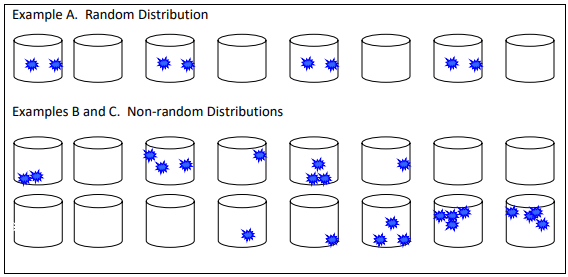
Random Distribution: Microorganisms are distributed evenly throughout the entire lot. Microorganisms will likely be detected. This type of microbial distribution is not a factor of time since at any point in the sampling process there is an equal opportunity to detect the organism in question (Example A).


Non-random Distribution: Microorganisms are not distributed evenly throughout the entire lot. Microorganisms may not be detected by random sampling. This type of distribution is dependent on time since the microbial contamination is only represented at certain intervals in the production cycle without equal opportunity for detection (Examples B and C)

Example B shows a non-random distribution pattern of organisms that can be present at the startup of production. In this case, the food actually cleans the line, so that over time the contaminant is reduced to undetectable levels. If a retest sample of this lot of production is pulled from containers made later in the day, then the retest results will be negative for the target organism, even though the organism was present.

Example C is another example of non-random microbial distribution that can occur when condensate drips onto exposed product. Condensate began to drip sometime after startup and continues throughout the rest of the day, increasing toward shutdown. If retain samples taken at the beginning of the day were selected for retest analysis, the retest samples would likely be negative for the target organism even
though the organism was present in that lot of production.


Sampling
Microbiological analyses are only as good as the sampling procedure used to procure the sample. Every effort must be made to obtain a RANDOM SAMPLE. “Spot sampling” or taking a single sample will not yield a representative sample. FDA recommends taking 30 random 25g samples during the entire production run for Ready-to-Eat products that will be consumed without a process lethal to microbial pathogens. These include products such as cereals, confectionary products, cheese, dairy, spices – and many others (FDA Bacteriological Analytical Manual). For fluid and powdered products, most manufacturers employ mechanical or auto-samplers. For discrete products, samples are taken on a time production basis (i.e. one candy bar every half hour) and then the analytical unit (the actual amount tested) is made by compositing. Compositing must be performed carefully and thoughtfully, not only to ensure a representative sample, but also to avoid sample contamination.

Organism Die-off
Organisms contaminating a product may not survive at the same level for long periods of time. For example, Escherichia coli (E. coli) is not capable of long-term survival in an inhospitable matrix, such as chocolate, and will eventually die off. Levels may fall below the ability of an assay to detect the organism.


Levels of Contamination and Probability of Detection
The probability of finding a target organism in a retest sample is based on the probability of finding the target organism in the original sample. If 10 samples are collected for analysis and only one tests positive for a pathogen, the level of contamination is one in ten or 10%. Based on a standard statistical analysis, if there is a 10% chance of finding the target organism in the original sample, then the ability of finding the organism a second time by retest sampling is [10% X 10%] or [0.10 X 0.10 = 0.01] or one in a hundred. Similarly, if the level of contamination is 5%, the probability of finding the positive a second time is one in twenty-five and 1% is one in ten thousand. The short hand version of this is to simply square the level of
contamination, as shown here:

Level of Contamination- Probability of Finding the Target Organism in the Original Sample Probability of Finding the Target Organism in a
Retest Sample
One in two (50%)One in four (25%)
One in four (25%)One in sixteen (6.5%)
One in five (20%)One in twenty five (2.5%)
One in ten (10%)One in a hundred (1%)
One in a hundred (1%)One in ten thousand (0.01%)

There are many factors that can result in correlation differences between original and retest results. But, if a retest is desired, pull many random samples and request a retest as soon as possible.

When To Revalidate A Process Preventive Control

Ryan Maus · October 3, 2023 ·

By Ryan Maus
FSMA legislation (21 CFR §117.160) requires that preventive controls be validated to assure that they are appropriate to control the hazards identified in the food safety plan. Generally, validation occurs:

  • Prior to, or within 90 days of implementation of the food safety plan
  • Whenever a change to a control measure(s) could impact its ability to control the hazard(s)
  • Whenever a reanalysis of the food safety plan reveals the need to do so

Concerning reanalysis of the food safety plan, according to FSMA legislation (21 CFR §117.170), this is required at least once every 3 years or:

  • Whenever new information about potential hazards associated with the food arise
  • Whenever appropriate after an unanticipated food safety problem
  • Whenever you find that a preventive control, combination of preventive controls, or the food safety plan as a whole is ineffective

So what is considered a significant product/process change? Examples from FSPCA’s PCQI training manual include:

  • Raw material changes, including a new supplier (e.g. change in viscosity, moisture levels, particle size; new pathogen hazard identified; increased microbial load)
  • Product or process changes (e.g. reduced water activity, changes in operating parameters, new equipment, equipment is moved)
  • Increasing production volumes that lead to extended run times, changes in bed depth, increased volumes of material in chambers
  • Adverse finding during review or observation of a recurring deviation (i.e. may suggest the validation is no longer adequate)
  • Emerging scientific information on hazards or control measures
  • Changes in consumers profiles and handling (e.g. marketing to children, infants, or an immunocompromised population)

Often, a food producer must consider changes to equipment, such as a heating element, and whether this would impact the equipment’s efficacy in controlling an identified hazard. The most conservative approach to demonstrate the preventive control’s efficacy would be to revalidate the process. However, another approach is to conduct a heat distribution study to verify that the heat distribution did not change significantly in a way that areas of the roaster see lower temperatures than when the roaster was initially validated. This could include collecting data that supports the initial validation, for example, temperature distribution data pre/post heating element replacement. If the analysis of this data indicates the same temperature profile, then you may be able to conclude that the reanalysis does not indicate the need for a full validation study. If the temperature profile has changed, then some additional study would be warranted.

Regulatory Watch Out!

Laurie Post · September 6, 2023 ·

Use of Unapproved Food Additives – FDA’s Public Inventory

Any substance used or intended for use in food must be authorized by the FDA for use as a food additive under the Federal Food, Drug, and Cosmetic (FD&C) Act, unless the use of that substance is generally recognized as safe (GRAS) by qualified experts or qualifies for an exemption.


As part of its on-going compliance activities, FDA conducts post-market activities to monitor the food supply for chemical contaminants. FDA identifies foods that contain a substance for which there is no authorization as a food additive and then reviews the regulatory status of this substance. FDA scientists analyze whether there is a basis to conclude that the intended use of the substance is GRAS or meets a
listed exception to the food additive definition. When FDA scientists determine that a substance is an unapproved food additive because it is not GRAS for its intended use (and does not meet a listed exception), they deem the additive to be unsafe and any food that contains the additive is adulterated.

On July 12, 2023, FDA released a public inventory of certain food ingredients that do not have GRAS status as determined by the agency and are therefore deemed unsafe. The inventory is a useful tool to assure the use of authorized ingredients.


The FDA Concludes Voluntary Pilot Program to Evaluate Alignment of Third-Party Food Safety Standards
with FSMA Rules


Food manufacturers may find that they are required to comply with one of the Global Food Safety Initiative standards in addition to the FDA’s Preventive Controls for Human Food or Produce Safety Rules. The FDA recently concluded a voluntary pilot program to evaluate alignment of private third-party food safety audit standards including BRC, FSSC22000, SQF and Global G.A.P. with applicable FDA regulations.


The pilot program was launched to help both FDA and industry gain a better understanding of whether these standards align with FDA regulations. Alignment between these standards may allow a company to structure their food safety plan to eliminate redundancy in their documentation and auditing programs.

Buyers and others in the food supply-chain often use third-party audits to assess the quality and safety of a product. Buyers, such as importers and receiving facilities, might stipulate an audit as part of a purchase agreement. In addition, three FSMA regulations – the Preventive Controls for Human Food rule, Preventive Controls for Animal Food (PC Animal Food) rule, and Foreign Supplier Verification Programs (FSVP) rule – allow for third-party audits to be used as supplier verification activities. Points of alignment would provide confidence that, in general, the third-party standards used to audit suppliers adequately address applicable FDA food safety requirements.


The results of the pilot program can be found in The FDA Concludes Voluntary Pilot Program to Evaluate Alignment of Third-Party Food Safety Standards with FSMA Rules. The FDA’s statements regarding alignment of the standards are referenced in the table below and apply only to the specified audit standards and addenda listed.


The reviews listed in the table focused on assessing third-party food safety standards and not the overall quality of the audit programs or qualifications of auditors. The FDA’s review and the findings from this pilot do not constitute an endorsement of any one food safety audit standard, or audits conducted under such standards. The FDA also adds a qualifying statement that third-party audits are not a substitute for FDA or state regulatory inspections for compliance with FDA regulations, including the Preventive Controls for Human Food Rule or the Produce Safety Rule.


Third-Party Food Safety Audit Standard and Applicable
Addendum
Scope Name
BRC Global Standard Food Safety plus the Global Standard Food Safety,
Issue 9, Interpretation Guideline
Preventive Controls for Human Food (PCHF)
FSSC 22000 Scheme 5.1 for Food Manufacturing plus the FSSC 22000, Version 3 FSMA PCHF Report Addendum
Preventive Controls for Human Food (PCHF
SQF Food Safety Code: Food Manufacturing, Edition 9 plus the SQF
Addendum for the Preventive Controls for Human Food
Preventive Controls for Human Food (PCHF)
GLOBALG.A.P. Integrated Farm Assurance – All Farm Base Crops Base – Fruit and Vegetables Checklist. Version 5.4-1- GFS plus the GLOBALG.A.P. Food Safety Modernization Act Produce Safety Rule Add-on Module Version 1.3Produce Safety Rule (PSR)
*Did not include Subpart E, related to Agricultural Water (as applicable to non-sprout produce) or Subpart M, related to sprouts

  • « Go to Previous Page
  • Page 1
  • Page 2
  • Page 3
  • Page 4
  • Page 5
  • Go to Next Page »

Footer

CONTACT US

Have a question? Contact our Sales team.

Request Info

Subscribe to our newsletter

Subscribe

“Science you can trust from concept to consumer -since 1967”

We are proud of our integral role in helping to ensure product safety and quality for all our clients.

  • Facebook
  • LinkedIn
  • Twitter

CAREERS

Deibel Laboratories is always seeking energetic individuals to fill positions at our rapidly growing corporation of food and pharma/cosmetic testing laboratories.

VIEW CAREERS

LOCATIONS

California, Idaho, Pennsylvania, Sarasota, Gainesville, Lakeland, Illinois, Minnesota, Missouri, Wisconsin, Kansas, Tennessee, Texas, Canada

SEE LOCATIONS

Copyright © 2026 Deibel Laboratories, All Rights Reserved.
PRIVACY NOTICE · COOKIE POLICY · TERMS AND CONDITIONS